Chia Seeds for Hair Growth: Benefits, Best Time to Eat, and How to Use Them
Chia seeds are no longer merely a popular superfood for smoothies and weight reduction. In recent years, they have received attention for their ability to improve hair growth, strength, and scalp health. When utilized appropriately, these small seeds are high in important nutrients and help to nourish hair from the inside.
Many people expect immediate results when they hear about chia seeds for hair, but actual hair growth requires patience, right scalp care, and constant nutrition. Chia seeds are not a quick fix. Rather, over time, they assist in establishing the proper circumstances for stronger, healthier hair.
In this article, you’ll learn how chia seeds promote hair growth, when to eat them, how to use them safely for hair care, and what results to expect. Whether you’re battling with hair loss, dryness, or slow growth, this article breaks it down in a simple and helpful manner.
Why Chia Seeds Are Good for Hair
Hair health begins at the follicular level. Nutrient intake, scalp condition, digestion, stress, and lifestyle behaviors all influence how hair grows and strengthens. Chia seeds improve hair health by tackling multiple problems at once.
Nutritional Profile of Chia Seeds
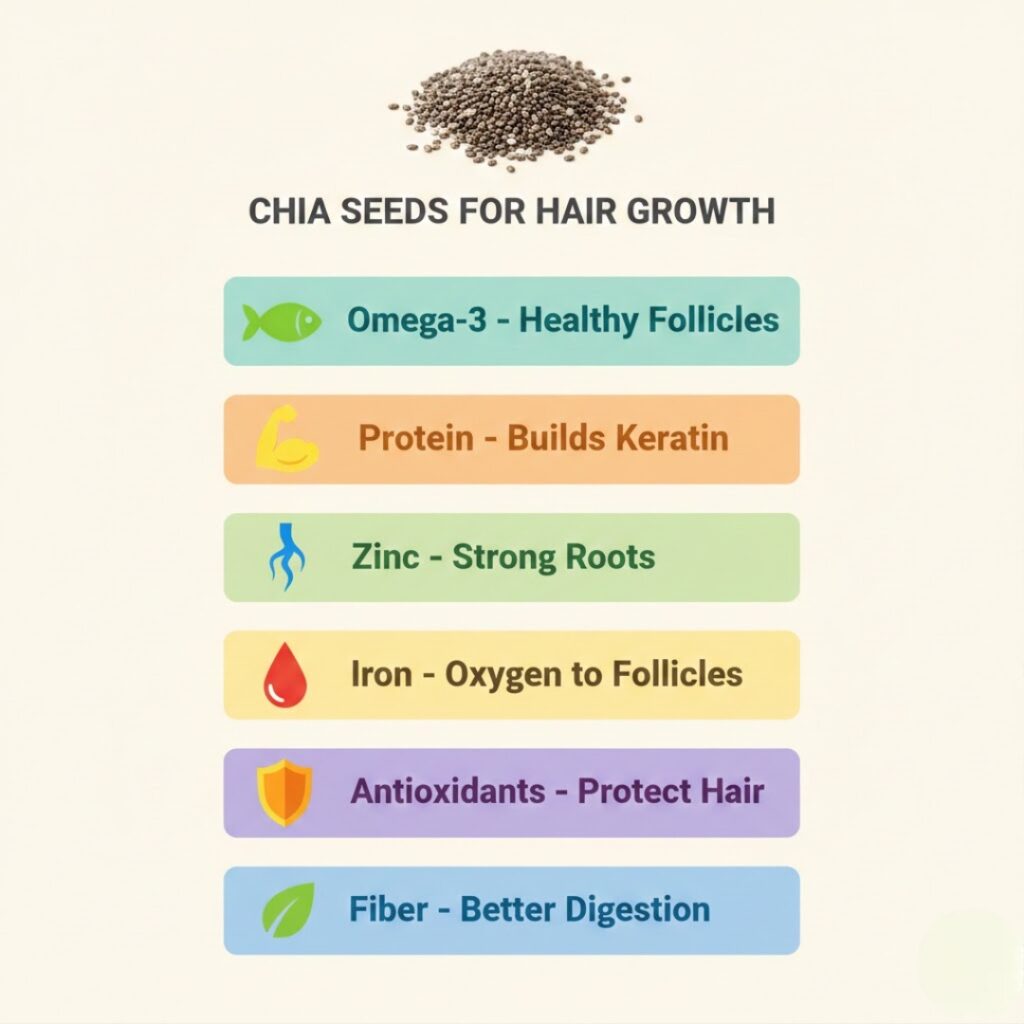
Chia seeds contain omega-3 fatty acids, plant protein, zinc, iron, magnesium, calcium, antioxidants, and fiber. Omega-3 fatty acids aid to minimize scalp irritation and maintain healthy hair follicles. Protein provides the building blocks for keratin, the structural component of hair strands.
Zinc and iron perform vital functions in tissue healing and oxygen transport to hair roots. Mineral deficiencies are typically associated with hair thinning and severe hair loss. The high fiber content of chia seeds aids digestion, allowing the body to absorb nutrients more effectively.
How Chia Seeds Support Scalp and Follicle Health
Healthy hair follicles require adequate moisture, sufficient blood circulation, and a consistent supply of nutrients. Chia seeds aid to keep the scalp wet, prevent dryness, and protect follicles from oxidative stress associated by pollution, heat style, and environmental damage.
While the effects are gradual, frequent nutrition promotes a healthy environment for persistent hair development.
Key Benefits of Chia Seeds for Hair
Strengthening Hair Roots and Reducing Hair Fall
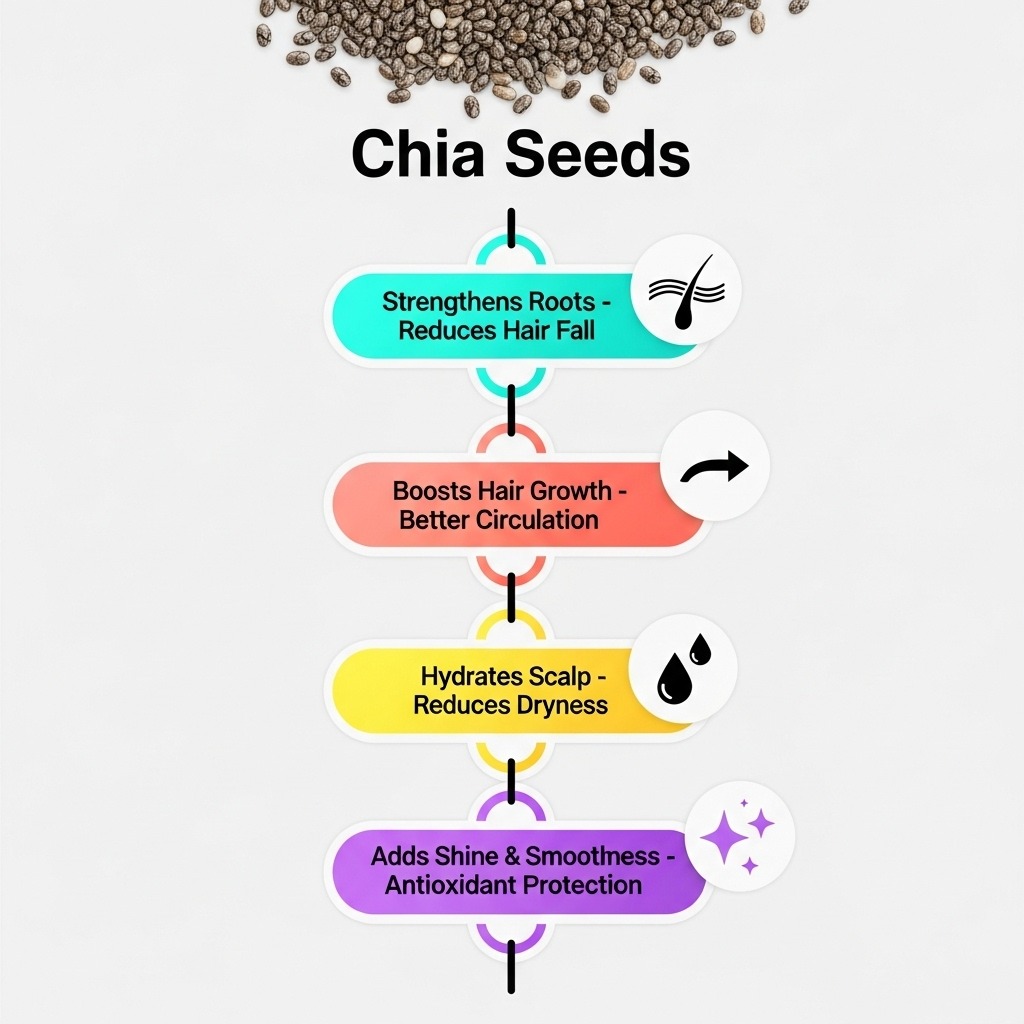
Chia seeds are high in protein and zinc, two key minerals that help strengthen hair roots and prevent breakage. Stronger roots reduce hair losing, which is especially beneficial for persons who have fine, weak, or chemically treated hair. Over time, regular intake or topical application might make your hair seem more tough and less prone to snapping.
Chia seeds contain omega-3 fatty acids, which promote blood circulation to the scalp, ensuring that hair follicles receive adequate oxygen and nutrition. Better follicle feeding promotes consistent and healthier hair development, gradually lengthening, thickening, and strengthening your hair.
Improving Scalp Hydration and Reducing Dryness
Chia seeds help keep your scalp moisturized since they naturally retain water. They can fight dryness, irritation, and flakiness brought on by dehydration when consumed regularly or applied as a chia seed gel. Strong and healthy hair growth is made possible by a well-hydrated scalp.
Enhancing Hair Shine and Texture
Antioxidants included in chia seeds shield hair from environmental stresses including pollution and heat styling. Regular use can make your hair shinier, smoother, and more elastic, which lowers the chance of breakage and makes it look healthier and more vibrant.
Best Time to Eat Chia Seeds for Hair Growth
Timing does not guarantee outcomes, but it can affect how well the body absorbs nutrients.
Eating Chia Seeds in the morning
Consuming chia seeds in the morning allows the body to absorb nutrients more readily after an overnight fast. The omega-3s, protein, and minerals help to maintain energy levels and nourish the hair throughout the day. Morning consumption also aids digestion, hence improving overall nutrition absorption.
Eating Chia Seeds at Night
Consuming chia seeds at night promotes nighttime repair. During sleep, the body concentrates on cell renewal, including hair follicles. Chia seeds contain tryptophan, which promotes better sleep quality. Good sleep can help reduce stress-related hair loss.
Morning vs Night: Which Is Better?
Both choices are advantageous. While evening consumption promotes healing and restful sleep, morning intake supports daily sustenance. Choose what works best for your routine because consistency is more important than timing.
How to Eat Chia Seeds for Hair Growth
Recommended Daily Amount
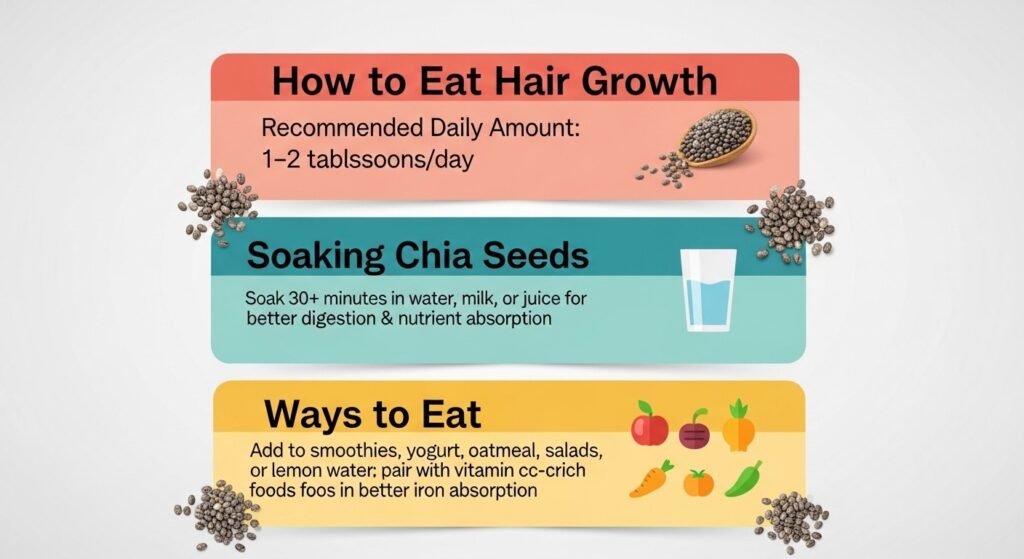
For the best hair results, consume one to two tablespoons of chia seeds every day. Consuming more than this does not promote hair growth and may even cause digestive discomfort, such as bloating or gas. Starting with a little amount and gradually increasing will help your body adjust, particularly if you are new to high-fiber foods.
Why You Should Soak Chia Seeds
Chia seeds absorb liquid quickly, swelling into a gel-like substance. Soaking them for at least 30 minutes in water, milk, or juice is beneficial in two ways:
It alleviates digestive problems such as bloating and stomach distress.
It increases nutrient absorption, which means your body can better absorb important omega-3 fatty acids, protein, zinc, iron, and other vitamins.
Soaking is particularly essential if you desire to eat chia seeds on an empty stomach or as a quick snack. You can also make a larger batch of chia gel and keep it in the fridge for easy use throughout the week.
Best Ways to Add Chia Seeds to Your Diet
Chia seeds are extremely versatile and can be added to your daily meals in simple ways:
Smoothies: Blend soaked chia seeds with fruits and milk or plant-based milk for a nutrient-packed drink.
Yogurt: Sprinkle chia seeds over yogurt for added texture and nutrition.
Oatmeal or Porridge: Mix chia seeds into your morning oats to boost protein, fiber, and minerals.
Salads: Add soaked chia seeds to salads for extra crunch and hair-healthy nutrients.
Chia Water or Lemon Water: Stir chia seeds into water or citrus juice for a refreshing hydrating drink.
Pair chia seeds with vitamin C-rich foods like berries, oranges, or kiwi. Vitamin C improves iron absorption, which is crucial for nourishing hair follicles and promoting healthy hair growth.
How to Use Chia Seeds for Hair Care
Using chia seeds topically can boost the advantages of consuming them by allowing nutrients to work directly on the scalp and hair shafts. When properly applied, chia-based treatments assist boost hydration, strengthen hair roots, and enhance overall hair texture.
Chia Seed Gel Hair Mask
Chia seed gel is made by soaking chia seeds in water until they expand to a thick, gel-like consistency. When applied to the scalp and hair, this gel helps to retain moisture, strengthen the roots, and restore natural shine to dull or dry hair.
Soak chia seeds in water until they form a thick, gel-like texture
Apply the gel evenly to the scalp and along the hair lengths
Helps hydrate the scalp, strengthen hair roots, and improve natural shine
Leave on for 30–40 minutes, then rinse with lukewarm water
Avoid leaving the gel overnight, as it may dry out and cause flaking
Chia Seed Oil Scalp Massage
Use cold-pressed chia seed oil for best results
Warm a small amount of oil slightly before application
Massage gently into the scalp using circular motions for 5–10 minutes
Improves blood circulation and nourishes hair follicles
Leave on for 30 minutes or overnight, then wash with a mild shampoo
Chia Seeds and Curd Hair Pack
A chia seed and curd hair pack is especially good for those suffering from dandruff, dryness, or scalp irritation. Combine soaked chia seeds and fresh curd, then add a few drops of lemon juice. This mixture alleviates itching, balances the scalp, and reduces flakiness, while curd provides softness and manageability to the hair.
Mix soaked chia seeds with fresh curd
Add a few drops of lemon juice to help balance the scalp
Apply the mixture to the scalp and hair
Helps soothe itchiness, reduce dandruff, and soften hair texture
Leave on for 20–30 minutes, then rinse thoroughly
How Often Should You Use Chia Seeds for Hair?
The frequency of utilizing chia seeds for hair care should be determined by your hair type, scalp condition, and general hair health. While chia seeds are beneficial, using them too frequently does not speed up outcomes and may contribute to product buildup. A balanced routine keeps the scalp healthy and receptive.
Dry or Damaged Hair
Hair that is dry, brittle, or chemically treated benefits from additional nourishment. Using chia seed hair masks or scalp oils twice a week restores hydration, strengthens weakened strands, and reduces breakage.
Normal Hair
For balanced hair with no serious issues, once-weekly use is adequate to maintain hydration, gloss, and scalp health without overburdening the hair.
Oily Hair or Scalp
Oily hair reacts best to weekly or even ten-day use. Overuse may leave the scalp feeling thick or greasy.
Fine or Thin Hair
Fine hair should be washed once every two weeks to prevent buildup. If your hair responds nicely, you can progressively increase the frequency.
Who Should Avoid or Be Careful When Using Chia Seeds
People with sensitive scalps or known seed allergies require caution while applying chia seeds to their hair. A patch test is strongly advised before full treatment to check that there are no irritations or allergic reactions. Furthermore, excessive or frequent use may cause product accumulation on the scalp and hair strands, reducing volume and appearing dull rather than promoting hair health. Using chia seeds in moderation and monitoring how the hair reacts is critical to getting the greatest results.
Chia Seeds vs Other Natural Hair Growth Remedies
Chia seeds are increasingly being compared to classic natural hair care remedies such as coconut oil and fenugreek due to their nutrient-dense profile and simplicity of application. While all three promote hair health, they differ in texture, preparation, and usefulness for various hair types.
Chia Seeds vs Coconut Oil
Chia seeds and coconut oil are both popular natural cures for hair health, yet they have quite different textures and effects. Coconut oil is well-known for its deep conditioning effects and the potential to decrease protein loss in hair strands. However, it might feel heavy on the scalp and produce buildup, particularly in people with fine or greasy hair.
Chia seeds provide lightweight hydration while also containing critical nutrients including omega-3 fatty acids and antioxidants. They feed the scalp and hair without weighing it down, making them an excellent choice for people looking for moisture without greasiness.
Chia Seeds vs Fenugreek (Methi)
Fenugreek has long been used to treat hair loss, dandruff, and scalp irritation because of its high protein and nicotinic acid concentration. Despite its potency, fenugreek takes overnight soaking and has a pungent odor that many people dislike. Chia seeds are simple to prepare, have a neutral odor, and can be utilized both internally and externally. Their versatility and gentle nature make them an easy alternative to routine hair care while also promoting hair strength and scalp health.
Tips to Maximize Hair Growth Results with Chia Seeds
Small adjustments can significantly improve results.
Pairing Chia Seeds with the Right Nutrients
Combining chia seeds with foods rich in vitamin C, biotin, iron, and healthy fats enhances their effectiveness. Nutrition works best as a system, not in isolation.
Common Mistakes to Avoid
Using chia treatments daily is unnecessary and may cause buildup. Skipping soaking before eating can lead to digestive issues. Expecting instant growth is another common mistake.
How Long It Takes to See Visible Results
Improved softness and shine may appear within a few uses. Noticeable improvements in hair growth typically take four to six weeks of consistent use.
Are Chia Seeds Better Than Store-Bought Hair Products?
Chia seeds do not substitute medicated or focused therapy. They work best as a supplement to a regimen, nourishing hair organically, whilst other products target specific diseases such as severe dandruff or scalp disorders.
Frequently Asked Questions About Chia Seeds for Hair
Can You Eat and Apply Chia Seeds Together for Better Results?
Yes, incorporating chia seeds both internally and topically can improve overall outcomes. Eating chia seeds provides essential nutrients such as omega-3s, protein, and minerals, which promote hair development from within. Topical treatment feeds both the scalp and the hair strands. Together, they produce a more balanced and effective hair care regimen.
Can You Leave Chia Seed Gel on Hair Overnight?
Leaving chia seed gel on your hair overnight is not suggested. As the gel dries, it can suck moisture from the hair and scalp, resulting in dryness or flaking. For optimal effects, apply the gel for 30 to 40 minutes. Rinse gently with lukewarm water to stay hydrated.
How Soon Will Chia Seeds Improve Hair Growth?
Hair texture, softness, and luster may improve after just a few weeks of constant use. Hair growth is a slow process that normally yields obvious effects after one to two months. Consistency and proper usage are critical. The outcome may differ depending on nutrition, hair type, and overall health.
Are Chia Seeds Suitable for All Hair Types?
Chia seeds are lightweight and non-greasy, making them suited for most hair types. They perform especially effectively on dry, dull, or damaged hair. However, people with fine or greasy hair should take them in moderation. Before beginning any topical treatment, a patch test is always recommended.
Can Chia Seeds Cause Any Side Effects on Hair or Scalp?
Chia seeds are generally harmless when used carefully, but over use might cause product accumulation on the scalp. People with sensitive skin or seed allergies should exercise caution. Excessive consumption may cause digestive pain. Using the proper dosage helps to avoid adverse consequences.